
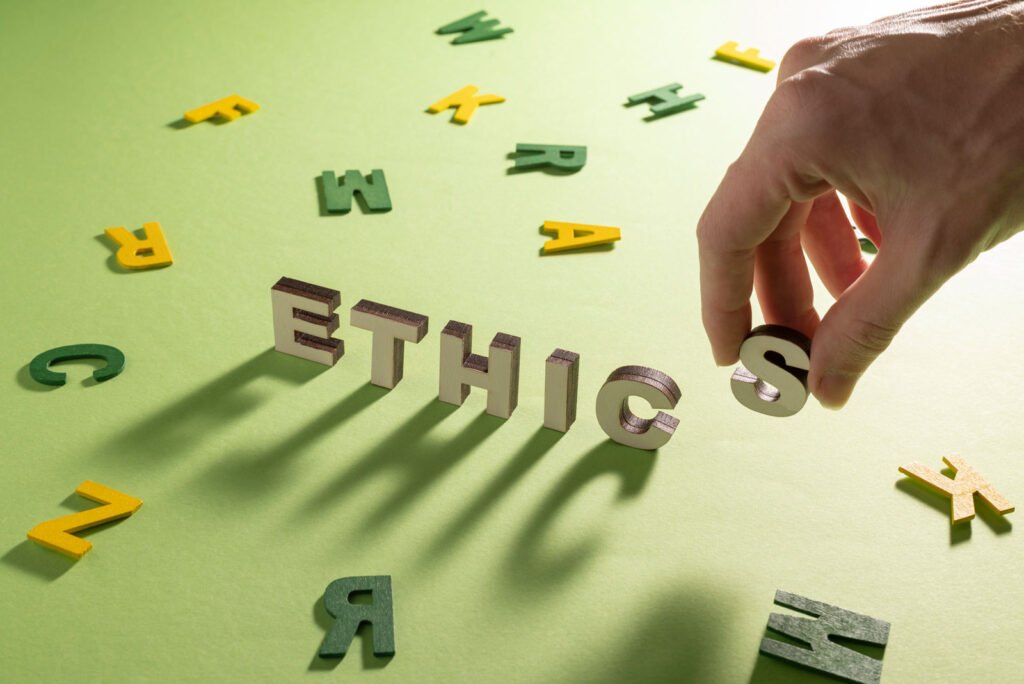
Ethics is often misunderstood as a rigid set of rules, something written, memorized, and enforced. In reality, ethics is far quieter and far more demanding. It lives in daily decisions, in moments no one applauds, and in choices made when convenience tempts us to look away. The five pillars of ethics: Integrity, Respect, Responsibility, Fairness, and Empathy are not ideals to display, but practices to live. They are less about appearing moral and more about becoming accountable to the kind of human being we are shaping ourselves to be.
1. Integrity: Choosing Honesty Over Convenience
Integrity is forged in silence. It appears when no one is watching and when shortcuts feel easier than honesty. At its core, integrity is not about perfection; it is about alignment. It asks a simple but difficult question: does how you live reflect who you say you are?
In professional and personal life, integrity often requires sacrifice of comfort, approval, or speed. It is choosing truth over convenience, consistency over image. Integrity builds trust not because mistakes never happen, but because accountability follows when they do. Over time, integrity becomes a reputation that speaks louder than credentials. It is the foundation upon which all ethical leadership and credibility stand.
2. Respect: Beyond Politeness Toward Recognition
Respect is frequently reduced to manners, titles, or formalities. But true respect goes deeper. Every person carries an inner world shaped by experiences, struggles, and hopes we may never fully understand. When we slow down enough to acknowledge this, respect transforms into recognition.
Recognition means seeing others not as roles, tools, or obstacles, but as complete human beings. In workplaces, communities, and institutions, respect creates psychological safety, the space where people feel valued enough to speak, contribute, and grow. Ethical cultures are sustained not by authority alone, but by mutual respect that honors dignity across differences.
3. Responsibility: Reclaiming Power Through Choice
Every decision sends ripples outward into the world and inward into our character. Responsibility is not about assigning blame; it is about reclaiming agency. To take responsibility is to acknowledge that our actions matter and that growth begins with ownership.
Ethical responsibility involves reflecting on impact, not intention alone. It asks us to learn from consequences rather than deny them. In leadership, responsibility means standing present during failure, not disappearing behind excuses. On a personal level, it means recognizing that while we cannot control everything that happens to us, we can always choose how we respond. Responsibility is the bridge between awareness and transformation.
4. Fairness: Balance Over Ego
Fairness is often mistaken for equality, but ethical fairness is more nuanced. Treating everyone the same does not always result in justice. Fairness requires awareness of context, access, and individual needs. It responds with balance, not ego.
In ethical decision-making, fairness asks us to look beyond rigid formulas. Who is most affected by this choice? Who has been unheard or underserved? Fairness challenges power when necessary and redistributes attention where it is lacking. It is not driven by favoritism or self-interest, but by a commitment to equity. Practiced consistently, fairness strengthens trust and social cohesion.
5. Empathy: Curiosity Without Agreement
Empathy does not require agreement; it requires curiosity. It begins with a pause, a willingness to soften assumptions and see through another window. Empathy is the ability to understand perspectives different from our own without immediately judging or defending.
In a polarized world, empathy is an ethical act. It allows dialogue to replace conflict and understanding to replace dismissal. Empathy does not weaken principles; it humanizes them. By listening deeply, we expand our moral imagination and reduce harm caused by indifference. Ethical empathy reminds us that understanding is not surrender, it is awareness.
Ethics as a Daily Practice
Ethics is not a checklist, a slogan, or a branding exercise. It is a daily practice shaped by small, repeated choices. It lives in how we speak when frustrated, how we act when unobserved, and how we treat those who cannot offer us anything in return.
Living ethically is not about moral superiority; it is about conscious participation in the world. The five pillars of ethics guide us not toward perfection, but toward coherence between values and actions, intention and impact. This is where legacy truly begins: not in grand gestures, but in quiet consistency.
In practicing ethics daily, we do more than follow rules. We shape character, culture, and ultimately, humanity itself.